Choosing a city to live in is one of the most consequential decisions a person makes — and arguably one of the least rigorously examined. Most people follow a job offer, follow a family connection, or follow the crowd. Very few sit down and honestly compare what three cities actually deliver when measured against each other across every dimension that shapes daily life. This piece does exactly that — across cost, careers, commute, culture, housing, and the intangibles that only reveal themselves after you have lived somewhere for six months.
Vadodara, Pune, and Ahmedabad each carry a distinct identity. None is objectively superior. All three deserve an honest assessment. Here it is.
Start with the number that most relocation decisions quietly orbit around: what does it cost to live well?
According to cost-of-living data updated in February 2026, maintaining a particular standard of living in Pune requires spending approximately 21% more than sustaining the exact same lifestyle in Vadodara. In concrete terms, a household spending ₹78,000 per month in Vadodara would need to earn and spend ₹97,000 in Pune just to keep pace. That gap is not incidental — it accumulates into ₹2.28 lakh annually, which in Vadodara translates into a school fee paid, an emergency fund built, or a down payment growing.
Against Ahmedabad, the difference is narrower but still present. Ahmedabad sits approximately 7–9% more expensive than Vadodara across most cost indices, driven primarily by higher housing demand in its premium western corridors and a more commercially priced food and retail environment along SG Road and Prahlad Nagar.
What makes Vadodara’s affordability particularly powerful is that it does not come at the expense of quality. The city does not ask you to compromise on the school, the hospital, the neighbourhood, or the restaurant — it simply prices all of them more generously.
A well-located 2BHK in Karelibaug or Manjalpur rents for ₹10,000–₹18,000 per month. In Gotri, where the IT corridor has driven up demand slightly, the same configuration sits between ₹13,000 and ₹22,000. Even in Alkapuri — Vadodara’s most premium residential address — a comfortable 2BHK rarely climbs above ₹26,000. For buyers, mid-range localities offer 1,000 sq ft apartments priced between ₹45 lakh and ₹75 lakh, with steady appreciation that rewards long-term ownership without generating the volatility that makes speculative markets feel unreliable.
Pune’s desirable residential zones — Baner, Kothrud, Viman Nagar, Aundh, Koregaon Park — carry rents of ₹22,000–₹40,000 for a comparable 2BHK. Localities closest to the Hinjewadi IT Park or Magarpatta tech corridor push significantly higher. Pune’s sustained demand from IT professionals and students has compressed housing affordability considerably over the past five years, making it an increasingly difficult market for first-time renters arriving with mid-range salaries.
Ahmedabad’s premium residential geography — Bodakdev, SG Road, South Bopal, Prahlad Nagar — commands ₹18,000–₹32,000 for a standard 2BHK. The city’s metro expansion has begun creating new demand hotspots along its eastern and northern corridors, but western Ahmedabad remains the most sought-after and consequently the most expensive residential zone. The gap between Ahmedabad’s aspirational addresses and its affordable ones is wider than in Vadodara — the city has a sharper socioeconomic gradient built into its residential map.
No comparison of cities is complete without addressing the question that makes most relocations happen in the first place: where will your career actually go?
Vadodara’s employment identity has been shaped by over a century of industrial investment. Reliance Industries, Larsen and Toubro at the L&T Knowledge City campus on NH-8, ABB India, Siemens India, ONGC, GAIL, GSFC, Alembic Pharmaceuticals — founded right here in 1907 — Zydus Group, and an expanding cluster of pharmaceutical manufacturers create an employment ecosystem of genuine depth for engineers, chemists, operations specialists, and life sciences professionals.
The India Decoding Jobs 2026 report by Taggd confirms what local professionals have observed for years: Vadodara’s tech parks and special economic zones now match metropolitan standards at materially lower costs, and the city’s Medical Devices Park is actively strengthening its position as a med-tech growth zone. The highest-paying roles in Vadodara cluster around engineering management, petrochemical operations, and IT director-level positions, with the average annual salary sitting around ₹18.6 lakh across all professional sectors.
The honest limitation: Vadodara’s IT sector, while growing — with TCS, Infosys, and L&T Infotech all maintaining presences here — is not yet the market that Pune is for software professionals seeking maximum lateral mobility. If your career is exclusively software-focused and job-hopping is part of the strategy, Pune’s density gives you options that Vadodara currently cannot match in volume.
Pune has evolved into what the India Decoding Jobs 2026 report describes as a manufacturing and mobility powerhouse. The city’s IT campuses host Infosys, Wipro, Cognizant, Capgemini, and Accenture alongside automotive giants Tata Motors, Volkswagen, Bajaj Auto, and a startup ecosystem built around Koregaon Park and Kalyani Nagar. For technology professionals, product managers, automotive engineers, and finance specialists seeking maximum optionality in a single city, Pune’s breadth is genuinely unmatched outside Bengaluru.
The trade-off is structural: Pune’s higher salaries are progressively absorbed by its higher cost base. A ₹90,000 salary in Pune and a ₹72,000 salary in Vadodara deliver comparable purchasing power — which means Pune’s premium jobs are often less financially transformative than they initially appear on an offer letter.
Ahmedabad has always been a trader’s city, and its 21st-century economy reflects that heritage with precision. The GIFT City International Financial Services Centre has added a substantial layer of financial sector employment — banking compliance, capital markets, fintech product management, and wealth advisory roles that neither Vadodara nor Pune currently replicates at scale. For entrepreneurs, FMCG professionals, and those entering chemical or pharmaceutical distribution businesses, Ahmedabad’s commercial infrastructure and trading culture provide a natural accelerant. The India Decoding Jobs 2026 report positions Ahmedabad as a national leader in pharmaceuticals, chemicals, and advanced materials — a characterisation that, notably, overlaps significantly with Vadodara’s own pharmaceutical belt just 110 kilometres south.
Urban research is consistent on one point across cultures and geographies: commute time is among the most reliable predictors of resident wellbeing. Cities that return time to their residents reliably produce happier ones.
Vadodara’s compact urban layout — connecting Gotri and Fatehgunj and Karelibaug and Manjalpur within a contained geography — keeps most daily commutes under 30 minutes. The city’s scale does not punish you before your workday begins. Residents of Vasna-Bhayli Road or Sama can reach the industrial belt at Makarpura or the commercial core at Sayajigunj without losing the morning.
Pune’s traffic situation is the city’s most widely cited livability challenge. The daily congestion on routes connecting Hinjewadi IT Park to the eastern residential zones — a stretch that can consume 60–90 minutes in peak hours despite covering a modest geographical distance — has consistently ranked among Maharashtra’s most pressing urban mobility problems. The Pune Metro is expanding but remains a partial solution for a city whose residential and employment geography has grown faster than its public transport infrastructure.
Ahmedabad has invested heavily in its Bus Rapid Transit System and its operational metro network, and the results show. For residents living along active metro corridors — particularly in the east-west and north-south served zones — daily commuting has genuinely improved. Cross-city movement in Ahmedabad’s sprawling geography, however, remains time-intensive for those whose routes fall outside established transit lines.
Pune’s university density — Savitribai Phule University, Symbiosis, Fergusson College, MIT World Peace University — gives the city an enduring youthful energy that shapes its restaurants, cafés, theatre scene, and weekend culture. For professionals in their twenties seeking maximum social variety alongside career growth, Pune’s cosmopolitan environment is genuinely difficult to replicate elsewhere in Maharashtra.
Ahmedabad carries its identity with the ease of a city that has never needed external validation. The Sabarmati Ashram, the Pol houses of the old city, the International Kite Festival that transforms January skies, the Manek Chowk street food culture — these are not curated experiences for visitors. They are the daily texture of life for Ahmedabad residents. The city’s social culture tends toward family-oriented and community-rooted rather than individually expressive, which suits some people beautifully and others not at all.
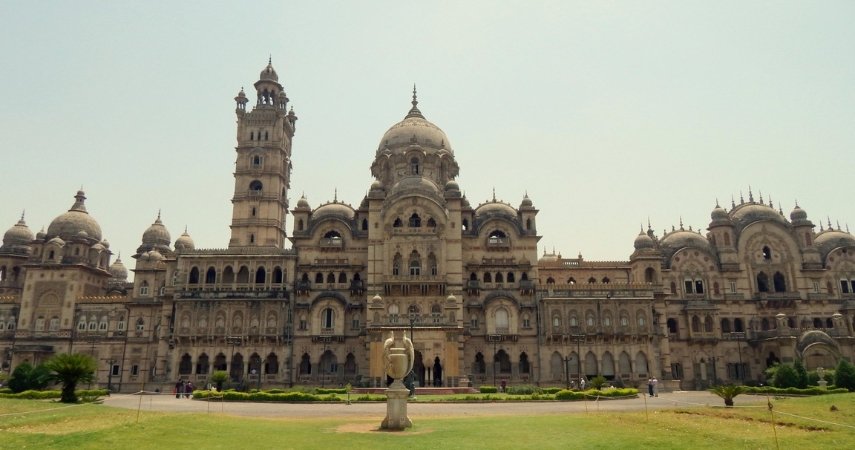
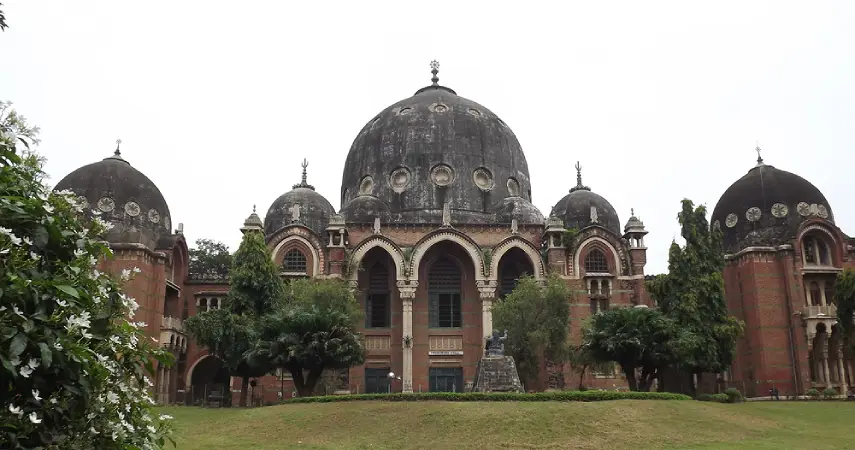
Vadodara’s cultural identity was deliberately constructed by Maharaja Sayajirao Gaekwad III’s century-long investment in arts, education, and civic life — and that deliberateness shows. The city’s classical music and dance tradition, the Faculty of Fine Arts at MSU, the Baroda Museum complex within Sayajibaug, the Vadodara Literature Festival, and a Navratri celebration that draws over 30,000 participants nightly to Vadodara Vibrant Garba alone give the city a cultural depth that rewards residents who engage with it seriously.
Vadodara’s social life is neither as frenetic as Pune’s nor as commercially driven as Ahmedabad’s. It is the social life of a city that values community over spectacle. For many professionals — particularly those entering their thirties, raising families, or simply growing tired of optimising every weekend for novelty — that quality becomes not a limitation but the point.
Not every city is the right answer for the same person at the same stage of life, and this comparison is most useful as a decision framework rather than a simple ranking.
If your career is built entirely in software, product technology, or advanced fintech, and your priority is maximum job-market depth alongside a cosmopolitan social environment, Pune’s premium is justified. The cost is real and persistent, but so is the professional ecosystem.
If you are building a business, entering financial services or capital markets, or operating in pharmaceuticals distribution and commercial trade, Ahmedabad’s GIFT City infrastructure and commercial culture offer advantages that neither Vadodara nor Pune currently replicates.
If you work in engineering, chemical manufacturing, pharmaceuticals, or petrochemicals — or if you work remotely and have the professional latitude to carry your income into a more affordable city — Vadodara’s combination of industrial depth, cultural richness, human-scale daily life, and genuine affordability is exceptionally difficult to match. A salary that feels unremarkable in Pune supports a life here that feels genuinely generous. That is not a minor distinction. Over years, it is the difference between building something and simply sustaining something.
Vadodara does not shout its case. It lets daily life make it. For those who listen, the argument is remarkably persuasive.
If you want to understand what that daily life truly looks and feels like — the neighbourhoods, the heritage, the food culture, the festivals, the industries — Vadodara Rocks is where that story is told in full. There is a great deal here worth discovering.